
Plate capture at the lane
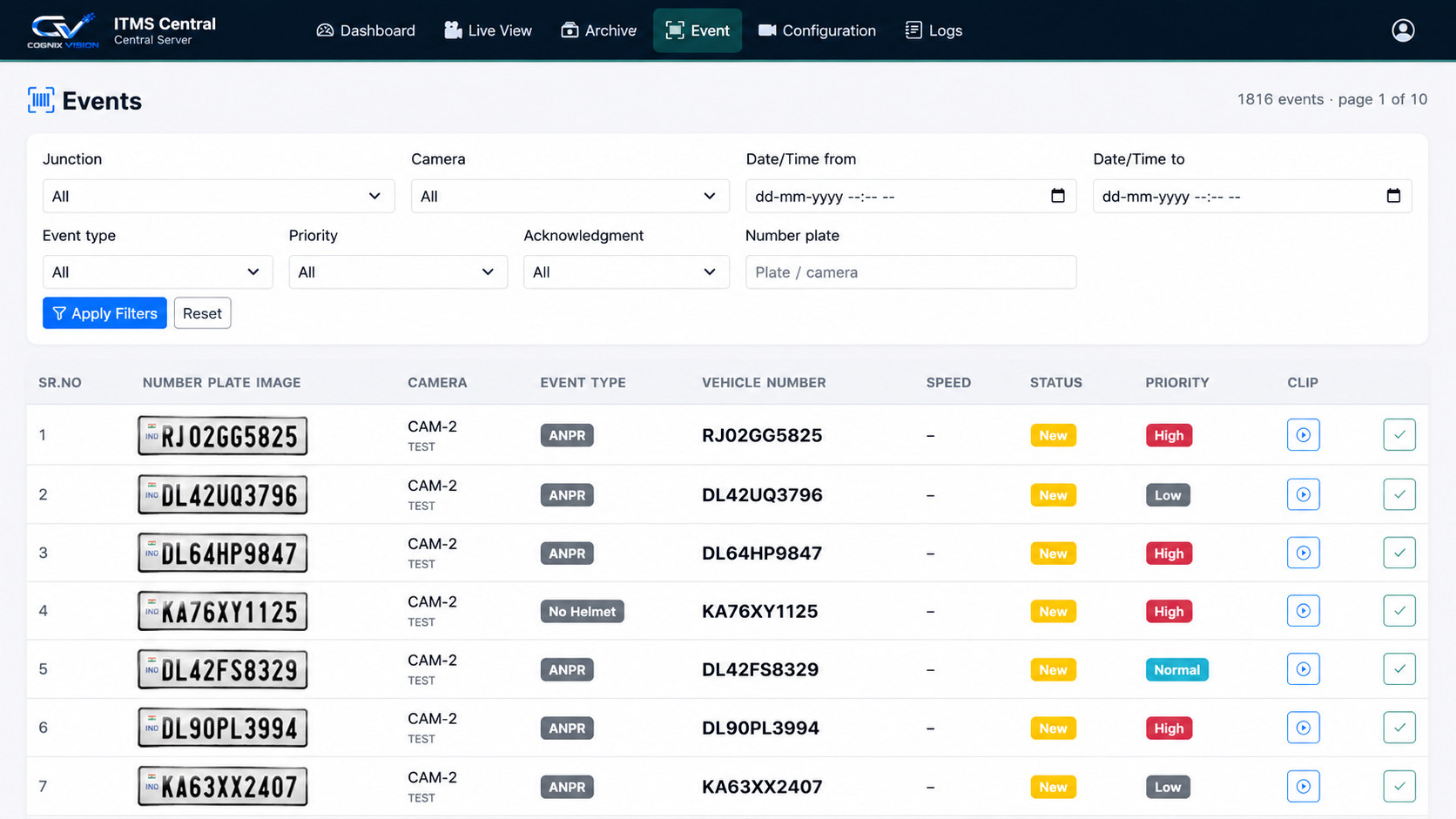
Every vehicle that passes is logged with the plate text, a cropped plate image and the full frame it came from, so a disputed read can be checked by eye.
Number plate recognition at junctions, gates and highways — every pass logged with the plate crop, and months of history searchable by number.
Home › ANPR Software
ANPR is easy in a demo video and hard on a junction at 11 pm in the rain. Our ANPR runs as part of the traffic management platform, reading plates at the lane, storing the crop with the full-frame context, and making months of passes searchable in seconds.
Every vehicle that passes is logged with the plate text, a cropped plate image and the full frame it came from, so a disputed read can be checked by eye.
Pair ANPR with speed, red-light and helmet detection so a violation record arrives with the plate already attached to it.
Type a number and get every pass across every junction, with the clip. This is the feature investigators actually use.
Red light and stop-line enforcement, with the plate read tied to the signal phase so the evidence stands on its own.
Journey timing between two points, wrong-way detection and stopped-vehicle alerts, all keyed to the plate.
Logistics yards log arrival and departure automatically, so gate registers reconcile against the WMS without anyone typing a number.
Whitelist the vehicles allowed in. Anything unlisted raises an alert at the gate before the barrier opens.
The event list is the working screen. Each row carries the plate crop, the camera it came from, the event type, the speed and whether anyone has acknowledged it. Filter by junction, date range, event type, priority or the plate itself.
Anyone can show you 99% accuracy on a sunny afternoon. These are the things that actually move the number, and we check all of them on site before we quote.
| Factor | Why it matters |
|---|---|
| Camera angle | Beyond roughly 30° off-axis, characters start to merge. The camera has to look down the lane, not across it. |
| Shutter speed | A plate at 60 km/h needs a fast shutter or it smears. This is a camera spec, not something software can recover. |
| Night illumination | IR is what makes a plate readable at night. Street lighting alone is not enough. |
| Plate condition | Bent, painted, obscured or non-standard fancy plates fail — for people too. No system reads what a human cannot. |
| Lane discipline | Where traffic weaves across lanes, one camera per lane stops working. That changes the camera count, so it changes the price. |
It is trained on Indian civilian and commercial plate series, including the single-row and double-row layouts you see on trucks and two-wheelers. Accuracy depends far more on camera placement and lighting than on the model, which is why we survey the lane before quoting.
A dedicated ANPR camera pointed down the lane, not a general overview camera. It needs a shutter fast enough to freeze the plate at the speed vehicles pass, and IR illumination for night. One overview camera plus one ANPR camera per lane is the usual arrangement.
For logging and search, often yes. For enforcement-grade capture at speed, usually not — general-purpose cameras blur the plate. We test your existing feed and tell you honestly which lanes need new hardware.
No. Plate reads, crops and clips stay on the servers you control. There is no cloud dependency and no per-read fee.
Events export by CSV or API with the plate, timestamp, camera, speed and the cropped image. Connecting that to a specific challan platform is a scoping conversation, not a checkbox.
We will tell you what read rate to expect from that camera, and what would have to change to improve it — before you spend anything.